


Wednesday, October 10, 2007
Election Day in Ontario

It's election day in Ontario.
We've had a dysfunctional election campaign here. Less than a year ago, the most important issue on our minds was the environment. This is finally recognized as important, urgent, critical to the survival of millions of people and to the economies of the world. What do the Progressive Conservatives decide to campaign on? Religious school funding, of course. Then, somehow it becomes the only issue talked about by the news media for the entire campaign.
The media claims to be blameless, based on the Jerry Springer defense. We're just giving the people what they want. It almost makes me want to believe in a vast left wing media conspiracy to make sure the PC party doesn't get elected.
I didn't shed a tear for the Conservatives. When you watch the Jerry Springer show, do you cry for the man in the tank-top who gets a chair thrown at him by his wife's sister who's pregnant with his child?
In the last four years, the Liberals have given us a few things, like a Greenbelt, the Places to Grow, and Move Ontario. You know what I don't love about these plans? They're plans. Just plans. Coal plants will close down. Trains and streetcar lines will be built. Things don't always go as planned. We're expected to ignore the past. The wife's sister says she'll never see the father of her child again, but you know you'll only believe her when she moves to the other side of the country.
A few people have tried to steer the conversation in a more meaningful direction. They mention the urgent issues of power generation, restricting developers, and transit improvement only to be drowned out by reminders that someone is a hypocrite about religious schools. "Go to Oprah! Go to Oprah!" yells the audience. You know what I'm talking about.
The saddest part of all is that the same thing will happen next time. There's even another trio of stars for tomorrow's episode of Springer, giving us more of what we want.
This system is failing and time is running out. I'll vote "yes" for MMP.
Labels: election, ontario, politics, queen's park

Thursday, September 27, 2007
Photos from Bells on Bloor
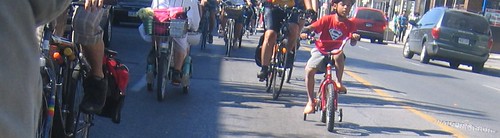
I was at the Bells on Bloor ride on Sunday. It was a very fun event. Well organized and amazingly well attended. I've heard numbers all over the place. My original guess was 300 people, but everyone seems to disagree. 500 is probably a better guess. Watch Martino's video and if you have the patience, you can do a count.
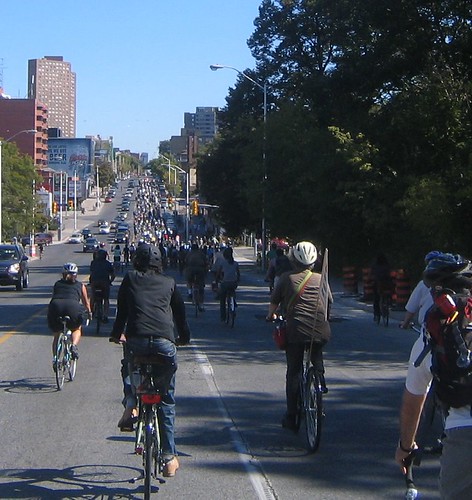
I have a few photos of the event up on flickr.
Labels: bellsonbloor, politics, tooker
Thursday, August 30, 2007
Two Big Years
This site is two years old today. I started it off with no big plans and no expectations. Back then, I had this feeling that my comments on other peoples' sites would give the impression I was a little bit crazy. I decided I wanted people to know that there was a real person behind the comments, so I would start my own blog. What better way is there to show you’re real than to talk to a computer a few times a week?
Since I'm feeling all reflective, I'll say something about the tag line for the site. "Finding Freedom on a Bike". At the time, I was entirely sick of hearing George Bush talk about freedom loving people (the good guys), and freedom haters (no, it's not complicated of course; those are the bad guys). I had this impression this site might turn into a big rantfest against George Bush, so I wanted to make it clear I was a freedom lover in case his employees (or his managers) found this site. They would see the word "freedom" in the corner, and say "Hey, it's no flapping stars and stripes, but he's a freedom lover. No need to worry about this guy." So far, it's been very successful.
There seem to be so many of us who know bikes are something special but are surrounded by people who haven’t yet caught on. Until they do, we’ll be considered "into" bikes, and that’s not such a bad thing.
Thanks for reading, or maybe skimming, and thanks for all the comments. I really appreciate you stopping by. Maybe we even got to meet in real life. Even better. I still find it amazing how people connect through this network.
Since I'm feeling all reflective, I'll say something about the tag line for the site. "Finding Freedom on a Bike". At the time, I was entirely sick of hearing George Bush talk about freedom loving people (the good guys), and freedom haters (no, it's not complicated of course; those are the bad guys). I had this impression this site might turn into a big rantfest against George Bush, so I wanted to make it clear I was a freedom lover in case his employees (or his managers) found this site. They would see the word "freedom" in the corner, and say "Hey, it's no flapping stars and stripes, but he's a freedom lover. No need to worry about this guy." So far, it's been very successful.
There seem to be so many of us who know bikes are something special but are surrounded by people who haven’t yet caught on. Until they do, we’ll be considered "into" bikes, and that’s not such a bad thing.
Thanks for reading, or maybe skimming, and thanks for all the comments. I really appreciate you stopping by. Maybe we even got to meet in real life. Even better. I still find it amazing how people connect through this network.
Tuesday, March 27, 2007
Toronto Rakes The Leaves While Etobicoke Makes Belief
There was another embarrassing comment from an Etobicoke councillor in the paper today. In the face of a reasonable plan to mitigate the effects of our pollution, a councillor demonstrated how much she cares about the rest of humanity. From the Globe article:
OK, I know that information on global warming is only available to us elite few who have access to: scientific reports, documentary films, television news, newspapers, radio or the internet. Maybe she hasn't heard.
I've read that using a good quality reel mower isn't much harder to push than a heavy gas-powered mower. I'll be able to testify to this in a couple months. (I used one easily a few years ago, but I was a poor student then and didn't really pay attention to things like convenience.)
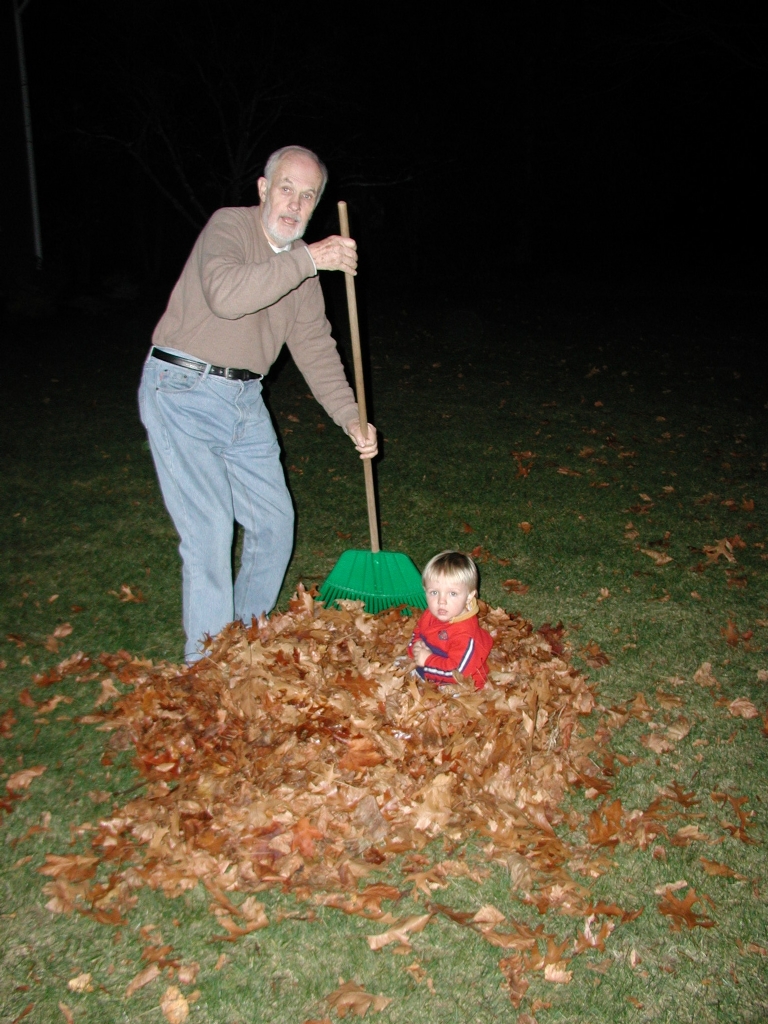
The second part of her comment is the embarrassing part. The response to this is so painfully obvious that I know I won't be the only one to say it. Councillor: Let me introduce you to a curious invention known as "the rake". You only need to use it a few times a year and it's maintenance free!
(People even have fun using them.)
"When you have big suburban lots, like I do . . . a push mower just ain't going to do it," said Councillor Gloria Lindsay Luby (Ward 4, Etobicoke Centre). "Who's going to do all that pushing? . . . We're urging everybody to keep your trees, plant more trees, yet, guess what, no leaf blowers. So again that's kind of a contradiction in terms."
OK, I know that information on global warming is only available to us elite few who have access to: scientific reports, documentary films, television news, newspapers, radio or the internet. Maybe she hasn't heard.
I've read that using a good quality reel mower isn't much harder to push than a heavy gas-powered mower. I'll be able to testify to this in a couple months. (I used one easily a few years ago, but I was a poor student then and didn't really pay attention to things like convenience.)
The second part of her comment is the embarrassing part. The response to this is so painfully obvious that I know I won't be the only one to say it. Councillor: Let me introduce you to a curious invention known as "the rake". You only need to use it a few times a year and it's maintenance free!

(People even have fun using them.)
Labels: climate change, politics
Wednesday, February 28, 2007
Money for nothing and your klicks for free
While people might be statistically against road tolls (just based on online discussions), support seems to be building. The logic is hard to argue with. Pay for what you use. If you take a step back and look at the high costs of providing the infrastructure, and consider the fact that people use it as much as they want once they pay a flat fee for their license plate, the current system doesn't make sense. This isn't even considering the air pollution associated with using our roads.
Look at our water supply. Water is a relatively cheap utility compared to all the asphalt and paving machines that are constantly resurfacing our streets. Water is not only essential to putting in a day's work, but it is, some would say, essential for life. We still put a price on it and make people pay for what they use.
Roads seem to be another story though. I think it's all about car creep. Over the years, we've slowly adjusted to the idea of repaving roads more and more often, and assumed that everyone benefits equally by road improvements.
As we transition to a society where transportation by personal-automobile becomes less popular, the percentage of the population putting the stress on the roads becomes less, and the benefit to non-users is less. For example, if the customers of your store all arrive by foot, then the road infrastructure doesn't affect your store's income in the same way.
An interesting essay on road tolls and the importance of taking advantage of the free market is on the Truck News website. (You didn't know I read that site?) Instead of suggestions for "carbon cost labels", we should stop messing around and let people decide with their money.
Now how should we take advantage of the free market? I've been talking about the costs of road use, but the costs of driving are many, even if they don't always hit the driver in the pocket. Pollution in the form of smog and greenhouse gases is a big one that car drivers get to do for free. There are a few different ideas floating around on how to charge people.
Tyler Hamilton in the Toronto Star's Clean Break column interviews the CEO of a Toronto company called Skymeter. The idea here is to give people a little GPS receiver for their car, and let them track their road use, then they pay at the end of the month. Not a bad idea, and it gives a city flexibility in terms of how people are charged, which roads, which times, parking locations, and more.
The other, more simple, instrument would be to incorporate into the gas tax a charge for using the atmosphere to hold your carbon dioxide or other pollutants. Last week on TV Ontario's Agenda, the program was called "The Debate: The Long Goodbye to GDP". (you can download the show's audio from the site). There was some discussion about how people should pay for CO2 emissions. CO2 tonnes could be priced by a government set price or by auction. There was clear agreement between Elizabeth May (Green Party leader) and Andrew Coyne (National Post writer) that the best way is to have an open auction-style market for the rights to emit CO2. Elizabeth May joked that she'd be giving Coyne party membership after they got off air. An auction would seem like the fastest way to come up with a price for CO2 and make the market solve the problem quickly (although possibly painfully). The severity of the impact would all depend on how fast we scaled back emissions (ie. how many tonnes we allowed ourselves to emit each month or year).
Imagine if the gasoline company, along with selling 25 litres of gasoline, had to sell the appropriate number of emission credits with the gasoline. As we scale back our emissions nationally, the price of those emissions goes up, because of a more competitive auction, and people adjust their consumption. This becomes less painful if the money from the credits goes into transit, sidewalks and bicycle infrastructure.
It would be really interesting to see if the price of gasoline actually dropped due to reduced gasoline consumption. I suspect that would only happen if many jurisdictions in North America implemented a carbon pricing scheme.
As long as people like money, the market will remain powerful.
Look at our water supply. Water is a relatively cheap utility compared to all the asphalt and paving machines that are constantly resurfacing our streets. Water is not only essential to putting in a day's work, but it is, some would say, essential for life. We still put a price on it and make people pay for what they use.
Roads seem to be another story though. I think it's all about car creep. Over the years, we've slowly adjusted to the idea of repaving roads more and more often, and assumed that everyone benefits equally by road improvements.
As we transition to a society where transportation by personal-automobile becomes less popular, the percentage of the population putting the stress on the roads becomes less, and the benefit to non-users is less. For example, if the customers of your store all arrive by foot, then the road infrastructure doesn't affect your store's income in the same way.
An interesting essay on road tolls and the importance of taking advantage of the free market is on the Truck News website. (You didn't know I read that site?) Instead of suggestions for "carbon cost labels", we should stop messing around and let people decide with their money.
Now how should we take advantage of the free market? I've been talking about the costs of road use, but the costs of driving are many, even if they don't always hit the driver in the pocket. Pollution in the form of smog and greenhouse gases is a big one that car drivers get to do for free. There are a few different ideas floating around on how to charge people.
Tyler Hamilton in the Toronto Star's Clean Break column interviews the CEO of a Toronto company called Skymeter. The idea here is to give people a little GPS receiver for their car, and let them track their road use, then they pay at the end of the month. Not a bad idea, and it gives a city flexibility in terms of how people are charged, which roads, which times, parking locations, and more.
The other, more simple, instrument would be to incorporate into the gas tax a charge for using the atmosphere to hold your carbon dioxide or other pollutants. Last week on TV Ontario's Agenda, the program was called "The Debate: The Long Goodbye to GDP". (you can download the show's audio from the site). There was some discussion about how people should pay for CO2 emissions. CO2 tonnes could be priced by a government set price or by auction. There was clear agreement between Elizabeth May (Green Party leader) and Andrew Coyne (National Post writer) that the best way is to have an open auction-style market for the rights to emit CO2. Elizabeth May joked that she'd be giving Coyne party membership after they got off air. An auction would seem like the fastest way to come up with a price for CO2 and make the market solve the problem quickly (although possibly painfully). The severity of the impact would all depend on how fast we scaled back emissions (ie. how many tonnes we allowed ourselves to emit each month or year).
Imagine if the gasoline company, along with selling 25 litres of gasoline, had to sell the appropriate number of emission credits with the gasoline. As we scale back our emissions nationally, the price of those emissions goes up, because of a more competitive auction, and people adjust their consumption. This becomes less painful if the money from the credits goes into transit, sidewalks and bicycle infrastructure.
It would be really interesting to see if the price of gasoline actually dropped due to reduced gasoline consumption. I suspect that would only happen if many jurisdictions in North America implemented a carbon pricing scheme.
As long as people like money, the market will remain powerful.
Labels: climate change, politics
Monday, February 19, 2007
Dr. Suzuki Makes House Call to Markham

David Suzuki has a way of talking that manages to express the great urgency of our situation while always remaining positive about solving the problem. Yesterday, he spoke to a group of people in Markham about climate change, the history, the problems and solutions. What I found most interesting was how he relates to his audience. Even though I'm sure he knows many people in the room are essentially causing (knowingly or unknowingly) the problem he's so concerned about, there's never a moment of judgement. As long as you're not flashing a camera in his face, he likes you.
Markham is a somewhat unique town, because, while being a huge suburban development, there is some momentum to make changes and to make environmentally friendly progress. For example, Markham is making faster progress than any other town in York Region in implementing the new bike plan. Markham also has made big changes in density in recent years. Densification is quite visible, especially near the Viva stops. If you stand on Highway 7, with Richmond Hill to the north and Markham to the south, you can see a distinct difference in building heights, locations, and connections to sidewalks.
From what I gathered, David Suzuki has been going to towns where he's been invited by a local environmental group. There were a few people from the environmental group in the room, along with a couple of the local councillors. He told us that he's hoping that everyone will help spread his message after he leaves, with the local environmental group providing some solid support.
As for his message, one thing he stressed was that our politicians are really not leaders. I think this was obvious to us all when we saw what happened with the Conservative Party after the poll came out saying Canadians put the environment at the top of their list of concerns. Not surprisingly, he had an opinion on the current round of Conservative attack ads. There wasn't a lot of love. During all this talk about politicians, we had a few laughs and listened to some of Suzuki's stories about conferences over his decades of experience. He gave the example of Al Gore as someone who wants to make a difference and has been on this issue from the beginning.
This all led to the key point: that everyone should stop worrying about the politicians and start to participate in the solution. The politicians will follow. His list of solutions is on his web site. You may have seen it before. The idea is to give people very acheivable goals (like avoiding driving a car on one of your workdays per week), and commit to meeting them. It seems like a very good way to get as many people on side as possible.
During the brief Q and A, one person (who I suspect was a reporter) asked what we are to make of these polls. We hear that everyone is concerned about the environment, but if you ask them if they're willing to pay more for gasoline or deal with any specific changes in their lives, people will not support it. The person pointed out that she suspects many of the people who want cheap gas are in this room. This was the first moment of confrontation in the event. The tension was quickly diffused as David Suzuki talked about asking people to pay extra, not for a litre of gasoline, but to pay something more for their children's future. The applauding crowd agreed.
After the talk, my friend and I left the crowd behind, hopped into my car and steered it over to the Cornell development, a highly touted new urbanist neighbourhood. With all these environmental issues on the top of our minds, it seemed like a good time to see what was being done in this town.

Maybe it was the fact it was bloody cold outside, with a biting wind, or the fact that we were in one of the new parts of the development, but it wasn't exactly bustling with life. The photograph is of one of the town-centre-style streets. It looks quite idylic, although a bit too new (unavoidably, I guess). This particular street appears to be brand new and still filling in with tenants. We saw another area that was a bit more active, with a hockey rink in the park outside the shops. We both noticed the distinct lack of a grocery store. The neighbourhood also failed the "I would like to sit down and have a coffee" test.
However, I'll take a page from David Suzuki's playbook and avoid passing judgement yet, because, like any neighbourhood, it could have been a matter of getting to know it better. The development was surprisingly large, and for all I know, we were just a couple of tourists in the wrong part of town. Cornell may still be one of Markham's small steps of progress. Unfortunately, with it being on the far edge of Markham, it'll be a long time before I go back.
Labels: climate change, politics
Tuesday, January 09, 2007
El Nino or Global Warming
How would Global Warming present itself, if not as a series of El Ninos? El Nino is caused by the warming of the Pacific Ocean, a patch of water warm enough that predominant winds will flow in other directions or become more chaotic. If the Pacific Ocean is warming up, we're not talking about a piddley body of water like Lake Simcoe or even Lake Superior. We're talking about the largest body of water on Earth. If Earth is warmer, then the Pacific Ocean will likely be warmer.
Maybe this year's weather is an isolated case. Isolated, except that it's following the warmest years in recorded history. Even if this is just an El Nino scenario, weather this warm has to have some impact on the weather in the future. The lakes aren't freezing over, for one thing. If they don't freeze, then they'll warm up earlier in the spring, won't they? I remember that science class well where you measure how much energy it takes to turn an ice cube into liquid water, then how much easier it is to increase it from 0 C to 1 C. In this case, I can only guess that all the energy from the springtime sun will go into increasing the temperature of the lakes.
The meteorologists in North America don't want to specifically say this weather is related to widescale climate change because they don't have enough data. However, the Brits, with a few more centuries of temperature readings (from back when the units of temperature measurement were based on the "number of seconds that hath pass'd whilst the smell of a horse's wind doth travel to the nose of a monk") have said that this is in fact related to climate change.
Jim Kunstler raises some interesting questions this week. It's not that he doesn't other weeks, but this week he isn't quite so inflammatory. If it's 67 F in January in Northern New York, what can we expect in July? If oil is dropping in price now because of low heating oil demand, what will happen when air conditioners start running this summer?
A couple weeks ago, I got around to watching An Inconvenient Truth. The graph that really stood out to me, and I assume to others, is the one that shows carbon dioxide levels over millions of years with the natural cycles from ice age to warm periods. The carbon dioxide levels track the temperature changes. The graph ends at today, showing the carbon dioxide levels now that are higher above any warm period than how far below they were during any ice age. The conclusion we should get from this is that current carbon dioxide levels are not natural and temperatures will likely rise, but Gore makes comments indirectly suggesting (a bit like how someone else indirectly suggested Iraq=9/11) that what we'll see is scorchingly hot temperatures, such as New York at 130 F.
In an almost contradictory way, the movie is honest with the audience by not bothering with units on any of the graphs, knowing the whole point is just to be struck by the sharp turns upwards of all the lines. As much as I feel the message of the movie is important and the movie is well done, I can't help but think about the powerful format of the movie, and the ability it will have to influence people to support environmental initiatives and, possibly, Al Gore.
The warm weather, the nomination of Stephan Dion, and An Inconvenient Truth are all coming together to create a frenzy of excitement among our news organizations. In Canada, reports are in on a recent survey stating that "the environment" is the most important issue to Canadians, trumping the ever-popular concern of health care. The insinuation is that people will now elect someone who is concerned about the environment, as if that, in and of itself, is their contribution.
Whether it's global warming or el nino this year, the problem still exists. No matter who is our environment minister, the problem still exists. Predicting the weather or who gets elected is a game that people seem to like playing. I like to play the game, too. We'll know people are serious when they start to look at the solutions, and you can probably predict which solution I would recommend.
Maybe this year's weather is an isolated case. Isolated, except that it's following the warmest years in recorded history. Even if this is just an El Nino scenario, weather this warm has to have some impact on the weather in the future. The lakes aren't freezing over, for one thing. If they don't freeze, then they'll warm up earlier in the spring, won't they? I remember that science class well where you measure how much energy it takes to turn an ice cube into liquid water, then how much easier it is to increase it from 0 C to 1 C. In this case, I can only guess that all the energy from the springtime sun will go into increasing the temperature of the lakes.
The meteorologists in North America don't want to specifically say this weather is related to widescale climate change because they don't have enough data. However, the Brits, with a few more centuries of temperature readings (from back when the units of temperature measurement were based on the "number of seconds that hath pass'd whilst the smell of a horse's wind doth travel to the nose of a monk") have said that this is in fact related to climate change.
Jim Kunstler raises some interesting questions this week. It's not that he doesn't other weeks, but this week he isn't quite so inflammatory. If it's 67 F in January in Northern New York, what can we expect in July? If oil is dropping in price now because of low heating oil demand, what will happen when air conditioners start running this summer?
A couple weeks ago, I got around to watching An Inconvenient Truth. The graph that really stood out to me, and I assume to others, is the one that shows carbon dioxide levels over millions of years with the natural cycles from ice age to warm periods. The carbon dioxide levels track the temperature changes. The graph ends at today, showing the carbon dioxide levels now that are higher above any warm period than how far below they were during any ice age. The conclusion we should get from this is that current carbon dioxide levels are not natural and temperatures will likely rise, but Gore makes comments indirectly suggesting (a bit like how someone else indirectly suggested Iraq=9/11) that what we'll see is scorchingly hot temperatures, such as New York at 130 F.
In an almost contradictory way, the movie is honest with the audience by not bothering with units on any of the graphs, knowing the whole point is just to be struck by the sharp turns upwards of all the lines. As much as I feel the message of the movie is important and the movie is well done, I can't help but think about the powerful format of the movie, and the ability it will have to influence people to support environmental initiatives and, possibly, Al Gore.
The warm weather, the nomination of Stephan Dion, and An Inconvenient Truth are all coming together to create a frenzy of excitement among our news organizations. In Canada, reports are in on a recent survey stating that "the environment" is the most important issue to Canadians, trumping the ever-popular concern of health care. The insinuation is that people will now elect someone who is concerned about the environment, as if that, in and of itself, is their contribution.
Whether it's global warming or el nino this year, the problem still exists. No matter who is our environment minister, the problem still exists. Predicting the weather or who gets elected is a game that people seem to like playing. I like to play the game, too. We'll know people are serious when they start to look at the solutions, and you can probably predict which solution I would recommend.
Labels: climate change, politics, weather
Thursday, December 14, 2006
BREAKING NEWS: Ontario Helmet Law motion passed
Misguided politicians voted in favour of the motion for an expanded helmet law. I believe this means that the issue will now be debated. It is not yet law.
I am sure they are doing this thinking that it is helping out, but it is not.
Many of the reasons it is wrong to make a helmet law have been listed by the Citizens for Safe Cycling president on the Viki site.
Ontario Legislature unanimously calls upon government to make helmet use mandatory for province's cyclists
TORONTO, Dec. 14 /CNW/ - The Ontario Legislature unanimously passed a
Motion today, calling on the government to make helmet use mandatory for all
cyclists in Ontario.
The Private Member's Motion, introduced by Kitchener Centre MPP John
Milloy, also requests that the government explore legislative measures to make
helmet use mandatory for those using in-line skates, skateboards, scooters and
similar devices. Finally, the Motion calls upon the government to initiate a
comprehensive safety and education campaign to help promote helmet use by
cyclists, in-line skaters, skateboarders and those on scooters or using
similar devices.
At present, only those under the age of 18 are required to wear a
certified bike helmet when cycling on Ontario's roadways.
Numerous studies have indicated the success of helmet legislation and
education at reducing the number of serious injuries and even deaths.
For further information: Drew Collins, Office of John Milloy, MPP,
Kitchener Centre, Tel: (416) 325-1856
I am sure they are doing this thinking that it is helping out, but it is not.
Many of the reasons it is wrong to make a helmet law have been listed by the Citizens for Safe Cycling president on the Viki site.
Labels: politics
Wednesday, December 13, 2006
Provincial matters with provincial responses
The grey sky overhead today was brighter than the roof of my car yesterday. Other than a few idiots on the road, like the one driving in the oncoming traffic lane towards me while passing an SUV in a residential area, it was a pleasant ride.
I sent my second email to my Member of Provincial Parliament yesterday. She replied to my first, but sort of passed it off and told me to talk to municipal politicians. I was disappointed in that type of response, and told her that "cycling is transportation" and transportation is a provincial concern. I'm curious if this discussion will go anywhere now.
If you live in the province of Ontario, you might be interested to know that MPP John Milloy of Kitchener is pushing for an expansion of the helmet law to include all ages. This kind of law has done nothing but harm cyclist safety in other jurisdictions by reducing the number of cyclists on the road. This would be a good time to let your MPP know that you're able to make decisions on your own.
If the province wants to make cycling and walking safer, they should go after the people who drive recklessly, who we see every day.
The text of the Ballot Item follows. The original text is here, about half way down the page.
I sent my second email to my Member of Provincial Parliament yesterday. She replied to my first, but sort of passed it off and told me to talk to municipal politicians. I was disappointed in that type of response, and told her that "cycling is transportation" and transportation is a provincial concern. I'm curious if this discussion will go anywhere now.
If you live in the province of Ontario, you might be interested to know that MPP John Milloy of Kitchener is pushing for an expansion of the helmet law to include all ages. This kind of law has done nothing but harm cyclist safety in other jurisdictions by reducing the number of cyclists on the road. This would be a good time to let your MPP know that you're able to make decisions on your own.
If the province wants to make cycling and walking safer, they should go after the people who drive recklessly, who we see every day.
The text of the Ballot Item follows. The original text is here, about half way down the page.
Ballot Item Number 68 - To be debated on December 14, 2006.
Mr. Milloy - That, in the opinion of this House, the Government of Ontario:
Recognize the safety benefits of wearing an approved helmet by those using bicycles, in-line skates, skateboards, scooters and similar devices;
Acknowledge that the original intent of legislative changes made by this Legislature to Ontario's Highway Traffic Act in 1993 was that all cyclists should wear an approved helmet regardless of age;
Make helmet use mandatory for all cyclists in Ontario by repealing the regulation which exempts cyclists over the age of 18 from these legislative changes;
Explore legislative measures to make helmet use mandatory for those using other muscular-powered devices such as in-line skates, skateboards and scooters;
Take into account those who cannot wear a helmet because to do so would interfere with his or her religious beliefs or practices;
Instruct the Ministry of Health Promotion, in conjunction with the Ministry of Transportation and other relevant Ministries and stakeholders to develop a comprehensive education and safety campaign aimed at encouraging helmet use by those using bicycles, in-line skates, skateboards, scooters and similar devices;
Ensure any safety campaign also address broader safety issues related to bicycles, in-line skates, skateboards, scooters and similar devices including the role and responsibility of communities in ensuring the safety of all those using such devices as well as the special responsibility of motorists to ensure the safety of cyclists and others on our roadways.
Labels: bad drivers, politics, weather
Thursday, December 07, 2006
The 500 kilo challenge
We're being urged to conserve. I hope the new plan has some carrots and sticks in it.


Labels: politics
Tuesday, December 05, 2006
The budding veteran
Just in case there are any high paid openings for Cycling Advisor to the Prime Minister in the next year, I didn't mean to sound mocking here.
After pontificating on Stephane Dion's worthiness to be the the Liberal leader without doing any research, it became obvious to me why news powerhouses like Larry King prefer to work without reviewing any background material.* It's easy! However, Larry King has a small leg up on me in that he actually ends up talking to the targets of his news program.
Since my previous "analysis", I watched Stephane Dion in an interview on the TV Ontario program called The Agenda with Steve Paikin. He explained a lot, and left me thinking "too bad he's not going to win."
My complaint about the Liberal Party's lack of performance on the environment should be primarily aimed at the people there with Cretien, since, as I didn't realize, Dion only took over the reigns of Environment Minister in mid-2004. He had one and a half years. I'm not going to apologize for him, but I'm open to hearing a list of the programs he put in place that were apparently canceled (I searched online and haven't found anything yet).
At first I was annoyed by all his pillar talk (the 3 pillars of the environment, social blah blah), but I've since realized that what I thought was an attempt at high gloss marketing aimed at amateur politicians, was more likely an amateur marketing campaign created by a low gloss geeky politician. Maybe it was successful since I actually remembered the pillar that mattered to me months later.
On Cross County Check Up this past weekend (mp3 audio here), I was surprised to hear all the people saying that the Conservatives should be happy because of his lack of charm, or the NDP should be happy because he's not strong enough for those socially concerned. From what I see, if he can prove he's serious about a real environmental plan and social plan, he'll draw all those who've been reluctantly heading for the NDP and Green Party trying to inspire change. The NDP and the Green Party should be worried. And, as a result, so should the Conservatives.
* Somewhat relevant Larry King link
After pontificating on Stephane Dion's worthiness to be the the Liberal leader without doing any research, it became obvious to me why news powerhouses like Larry King prefer to work without reviewing any background material.* It's easy! However, Larry King has a small leg up on me in that he actually ends up talking to the targets of his news program.
Since my previous "analysis", I watched Stephane Dion in an interview on the TV Ontario program called The Agenda with Steve Paikin. He explained a lot, and left me thinking "too bad he's not going to win."
My complaint about the Liberal Party's lack of performance on the environment should be primarily aimed at the people there with Cretien, since, as I didn't realize, Dion only took over the reigns of Environment Minister in mid-2004. He had one and a half years. I'm not going to apologize for him, but I'm open to hearing a list of the programs he put in place that were apparently canceled (I searched online and haven't found anything yet).
At first I was annoyed by all his pillar talk (the 3 pillars of the environment, social blah blah), but I've since realized that what I thought was an attempt at high gloss marketing aimed at amateur politicians, was more likely an amateur marketing campaign created by a low gloss geeky politician. Maybe it was successful since I actually remembered the pillar that mattered to me months later.
On Cross County Check Up this past weekend (mp3 audio here), I was surprised to hear all the people saying that the Conservatives should be happy because of his lack of charm, or the NDP should be happy because he's not strong enough for those socially concerned. From what I see, if he can prove he's serious about a real environmental plan and social plan, he'll draw all those who've been reluctantly heading for the NDP and Green Party trying to inspire change. The NDP and the Green Party should be worried. And, as a result, so should the Conservatives.
* Somewhat relevant Larry King link
Labels: politics
Thursday, November 23, 2006
Car-captive
I've been growing a big metal box on my bum lately. It's quite embarrassing really. The box is actually so big that it entirely encases me (and up to four other people). It's a good thing I never claimed to be car-free. The main reason for driving has been related to work. I try not to discuss work here, so I'll leave my reasoning out of this, and it's not so interesting anyways.
I haven't started packing on the reserve fuel yet, at least not in a noticeable way. My pants that I bought over a year ago are still too big for me, but I guess I should expect small changes after only 4 days of passive transportation.
My car route home takes me along a road that I always avoid cycling on. It's a major arterial avenue where the speed limit is 60 km/h (most people do about 70 or 80 whenever they get the chance), with 2 lanes in each direction, and often a turning lane down the middle. I think it's good for me to drive once in a while so I'm reminded of how things appear from a car driving point of view.
Surprisingly, every day, I see at least two cyclists along this major road. In the more new-suburban area, they're almost always on the sidewalk. In the old-suburban area, they're usually on road. The only difference I can see is that in the new-suburban area there are more turning lanes, and cars move slightly faster.
The thing that worries me the most for cyclists along this road are the people who are constantly jockeying for position in the currently-fastest lane. These people are not necessarily weaving, but are constantly judging the speed of each lane, and switching as each one varies by 5 or 10 km/h. This seems to save brake pads rather than actually save time, but I don't think they see it that way.
In the car, a lot of people are driving like their cars are pieces in a sliding tile puzzle, moving left, right, up and down as needed to get their piece of the puzzle to the other side. The problem with tile puzzles is that the tiles are very close together. These people drive like it's imperative that they stay as close as possible to the car in front, or else the other tiles won't slide by properly. It leaves very little room for anything unfamiliar to happen.
When I'm in the right hand lane, I'm often thinking to myself that a curb-hugging cyclist could pop out from the right at any moment. I consider moving to the left lane, to avoid any chance of being close to a cyclist. But if I do that, someone else will just take my place. So I often stay in the right lane, ready to slow the cars down and pull far to the left when I see a cyclist. Maybe I overdo it, but I don't really care.
It's this car driving experience that reminds me that I'm making the right decision to cycle on the smaller streets, stop a little more often, and turn a little more often, but arrive with as little stress as possible.
Back to the last post's topic of lights: I know there's some mild debate over whether a flashing or solid rear light is best. I guess the argument for the solid light is that a bicycle is a vehicle and a solid light is what is legally required. The solid light adds to the impression of the bicycle as a proper vehicle that should be treated with respect by other road users. The flashing light is widely perceived to be more visible. At the very least it catches people's attention easily, even if it is more difficult to use to judge distance.
I passed a cyclist yesterday who was wearing a jacket with reflective stripes, had a flashing light on his seat post, and had a solid light near his rear axle. I suspect the solid light on the axle was powered by a generator. From 200 metres away or more, I saw the flashing light. As I got closer, I noticed his reflective stripes. It wasn't until he caught up to me again that I noticed the solid low-positioned light.
Right now, I have a solid light on my seat post, flashing lights on my body and helmet, and wear reflective gear. I think the most important thing is to get noticed well in advance, so the drivers snap out of their trance and prepare to pass safely.
Fortunately I'll be able to ride tomorrow. It is Bike Friday, after all. And the weather has been beautiful. I'll be waiting at the corner of Yonge and Lawrence at 8:00 AM in case someone out there wants to join me.
If you haven't had a chance to sign Tuco's petition yet, now's a good time! The petition is to "Promote Cycling in Canada". If you can pass it on to anyone you think might be interested, that helps too. Word is spreading, as I can see it's up to 714 signatures, and they're from all over Canada.
I haven't started packing on the reserve fuel yet, at least not in a noticeable way. My pants that I bought over a year ago are still too big for me, but I guess I should expect small changes after only 4 days of passive transportation.
My car route home takes me along a road that I always avoid cycling on. It's a major arterial avenue where the speed limit is 60 km/h (most people do about 70 or 80 whenever they get the chance), with 2 lanes in each direction, and often a turning lane down the middle. I think it's good for me to drive once in a while so I'm reminded of how things appear from a car driving point of view.
Surprisingly, every day, I see at least two cyclists along this major road. In the more new-suburban area, they're almost always on the sidewalk. In the old-suburban area, they're usually on road. The only difference I can see is that in the new-suburban area there are more turning lanes, and cars move slightly faster.
The thing that worries me the most for cyclists along this road are the people who are constantly jockeying for position in the currently-fastest lane. These people are not necessarily weaving, but are constantly judging the speed of each lane, and switching as each one varies by 5 or 10 km/h. This seems to save brake pads rather than actually save time, but I don't think they see it that way.
In the car, a lot of people are driving like their cars are pieces in a sliding tile puzzle, moving left, right, up and down as needed to get their piece of the puzzle to the other side. The problem with tile puzzles is that the tiles are very close together. These people drive like it's imperative that they stay as close as possible to the car in front, or else the other tiles won't slide by properly. It leaves very little room for anything unfamiliar to happen.
When I'm in the right hand lane, I'm often thinking to myself that a curb-hugging cyclist could pop out from the right at any moment. I consider moving to the left lane, to avoid any chance of being close to a cyclist. But if I do that, someone else will just take my place. So I often stay in the right lane, ready to slow the cars down and pull far to the left when I see a cyclist. Maybe I overdo it, but I don't really care.
It's this car driving experience that reminds me that I'm making the right decision to cycle on the smaller streets, stop a little more often, and turn a little more often, but arrive with as little stress as possible.
Back to the last post's topic of lights: I know there's some mild debate over whether a flashing or solid rear light is best. I guess the argument for the solid light is that a bicycle is a vehicle and a solid light is what is legally required. The solid light adds to the impression of the bicycle as a proper vehicle that should be treated with respect by other road users. The flashing light is widely perceived to be more visible. At the very least it catches people's attention easily, even if it is more difficult to use to judge distance.
I passed a cyclist yesterday who was wearing a jacket with reflective stripes, had a flashing light on his seat post, and had a solid light near his rear axle. I suspect the solid light on the axle was powered by a generator. From 200 metres away or more, I saw the flashing light. As I got closer, I noticed his reflective stripes. It wasn't until he caught up to me again that I noticed the solid low-positioned light.
Right now, I have a solid light on my seat post, flashing lights on my body and helmet, and wear reflective gear. I think the most important thing is to get noticed well in advance, so the drivers snap out of their trance and prepare to pass safely.
Fortunately I'll be able to ride tomorrow. It is Bike Friday, after all. And the weather has been beautiful. I'll be waiting at the corner of Yonge and Lawrence at 8:00 AM in case someone out there wants to join me.
If you haven't had a chance to sign Tuco's petition yet, now's a good time! The petition is to "Promote Cycling in Canada". If you can pass it on to anyone you think might be interested, that helps too. Word is spreading, as I can see it's up to 714 signatures, and they're from all over Canada.
Labels: bikefriday, politics, traffic